



Indonesia Elastic Rail Clip Production Project: Xuji Machinery's JH21 Series Presses Break Industry Bottlenecks
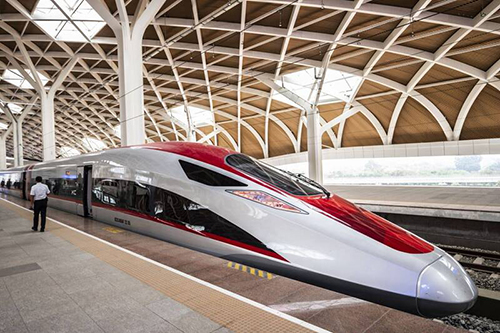
2025-09-08 16:54Indonesia is advancing the construction of the Jakarta-Bandung High-Speed Railway extension and regional rail network, driving a surge in demand for elastic rail clips and other fastener products. However, traditional manual production methods are unable to meet this demand. The combined effects of the local tropical heat and the three-stage hot press forming process require workers to handle hot metal parts for extended periods, which not only causes extreme fatigue but also leads to frequent safety accidents.
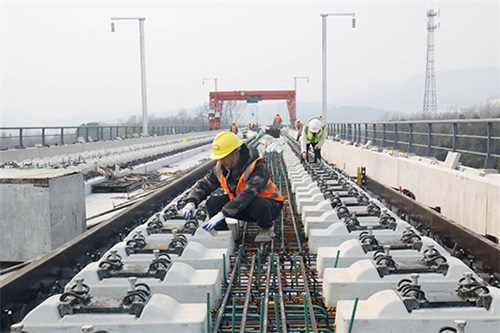
Furthermore, production efficiency fluctuates significantly depending on worker performance, resulting in poor product quality consistency. Additionally, rising labor costs and increasing recruitment difficulties in Indonesia further constrain industry development.
In response to this situation, a partner in Bandung, Indonesia, after careful investigation, decided in July of this year to install 4 sets of Xuji 's JH21-45 front stamping press—a high-performance front fixed bed crank press—as the core equipment for an automated elastic bars production system. Specifically engineered as a fixed bed crank press, this model features a stable structure that resists the impact of Indonesia’s tropical heat and humidity, solving the environmental instability issues of traditional equipment.
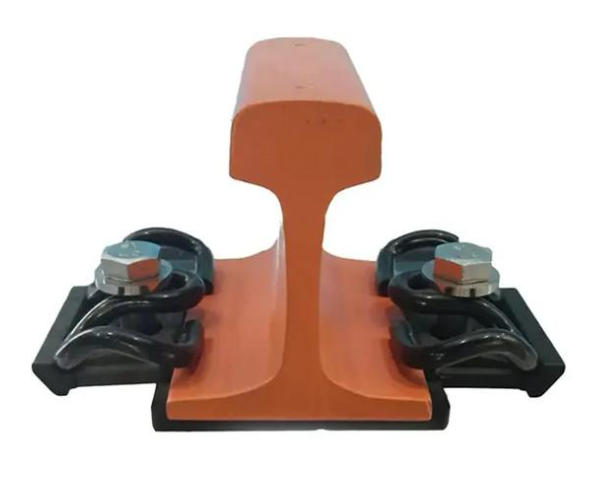
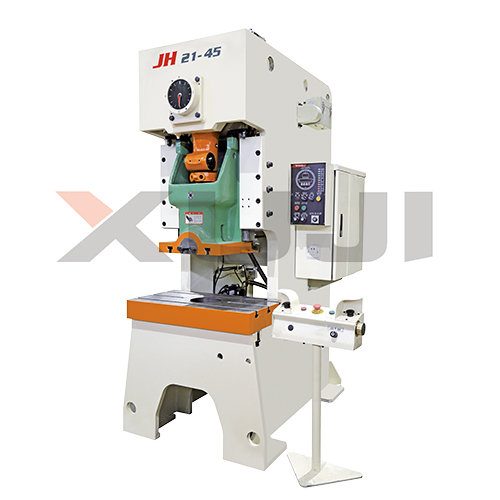
Adapted to Indonesia's tropical conditions, the Xuji JH21 series stamping press (a reliable crank press variant) works collaboratively with robots to fully automate the elastic bars production process, operating 24/7 with a stable cycle time of 16-17 clips per minute.
Compared to manual production, this improves efficiency by approximately 50%, ensuring stable production output. The robot's high-precision operation, combined with automatic temperature detection, ensures consistent quality for each elastic bars. Moreover, replacing humans with robots completely eliminates safety hazards in high-temperature and high-noise environments. Only one person is required to inspect the entire line, reducing the number of workers by 2-3 per shift, significantly cutting costs and providing a stable supply of fasteners for Indonesian railway construction.