


Case Study: Railway Elastic Clip Production Line Upgrade from Manual Manufacturing to Automation
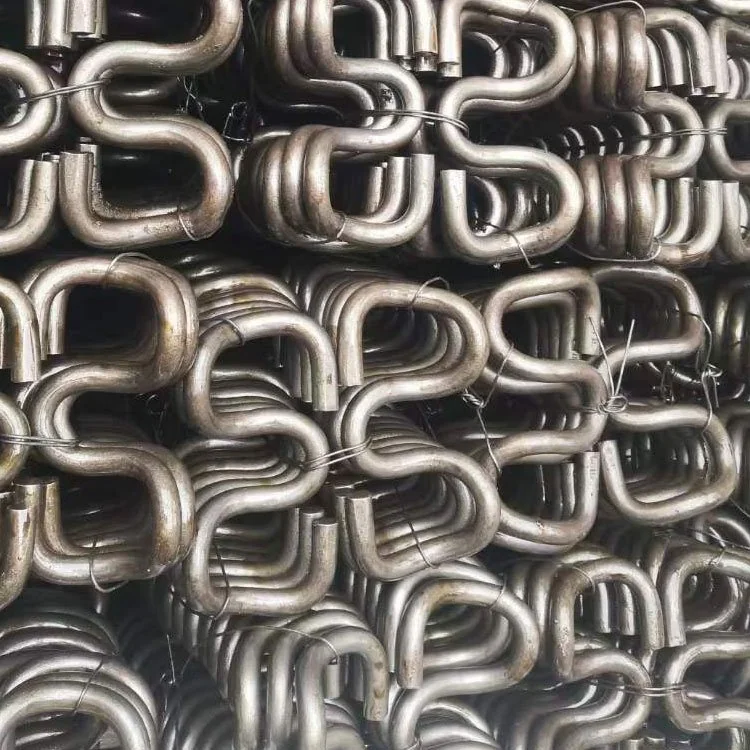
2026-07-19 12:29A railway component manufacturer in China had been producing W-type elastic clips for many years. As demand from railway construction and maintenance projects continued to increase, the company started evaluating ways to improve production capacity while maintaining stable product quality.
The existing manufacturing process depended heavily on manual operation. The existing production line had been operated by skilled workers for many years. Their experience helped keep daily production running smoothly, but manual handling between processes created limitations when higher output was required.
As order volumes increased, the customer began looking for a more stable way to organize production flow. Instead of adding more manual labor, the company chose to upgrade the workshop with an automated railway elastic clip production line developed around its own material conditions, output requirements, and factory layout.
Manufacturing Challenges Before Automation
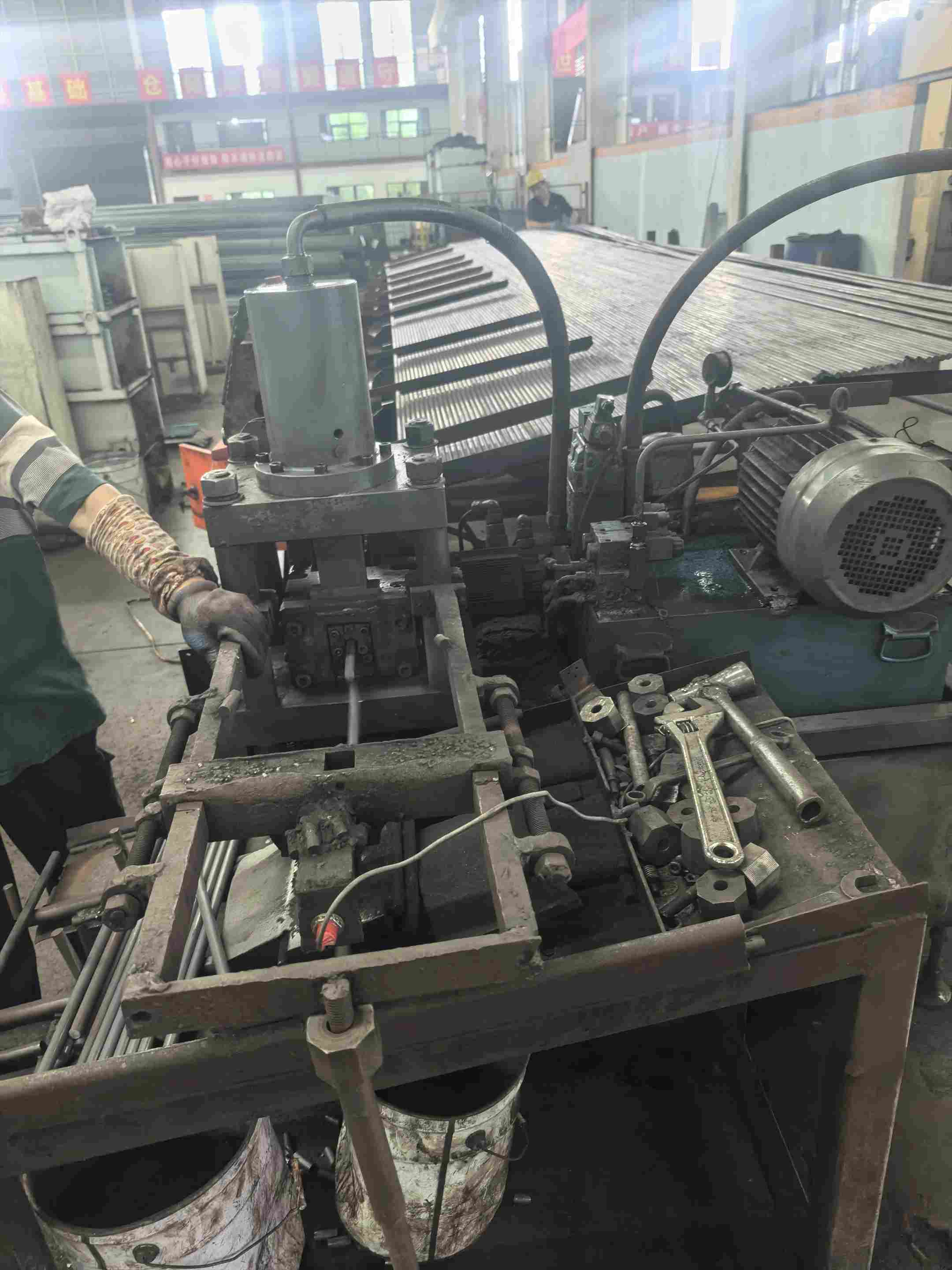
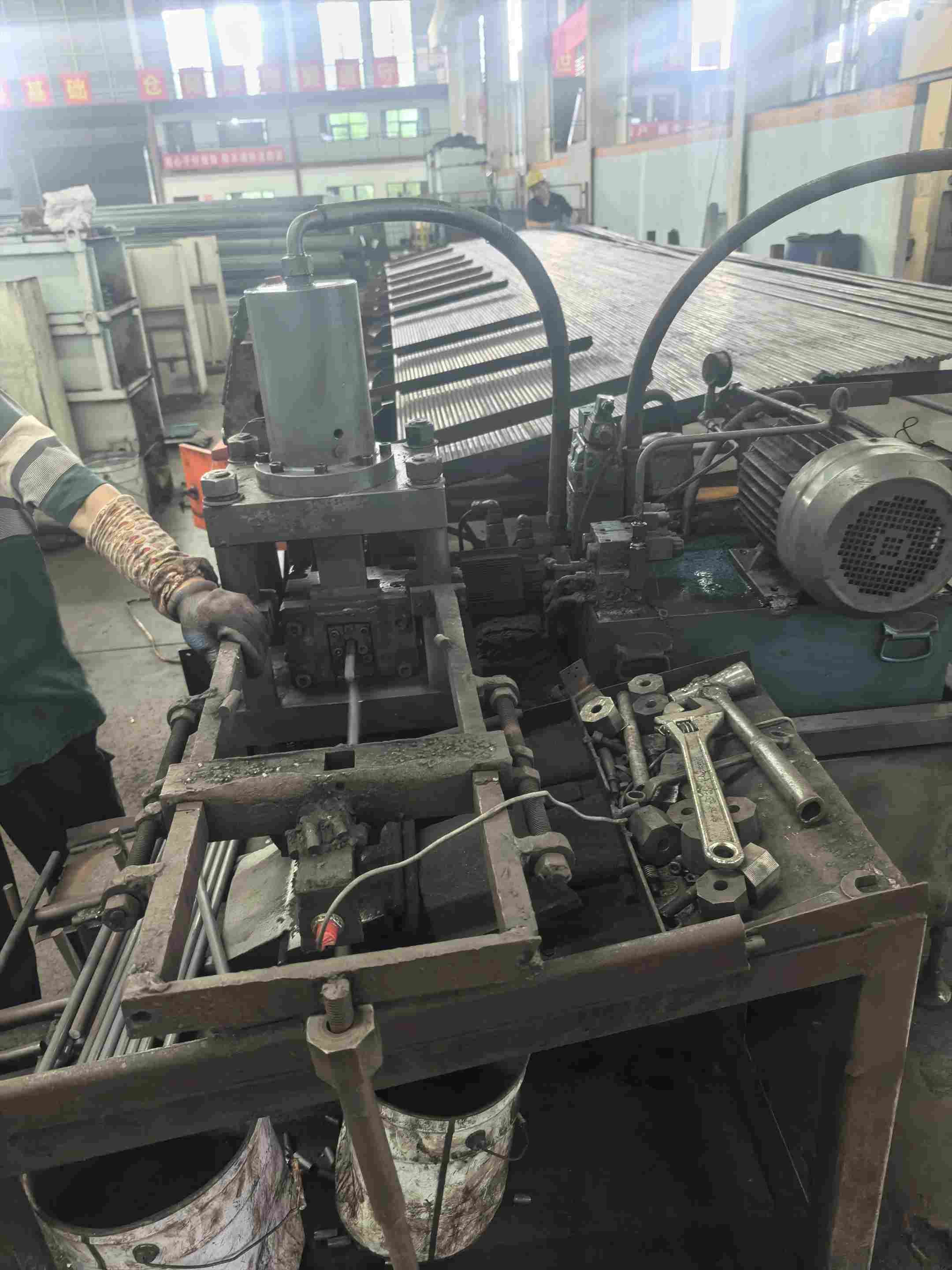
Before upgrading to automatic manufacturing, the production line relied on manual material loading, feeding, and movement between individual machines. These handlings were manageable during normal production, but they became increasingly difficult when the factory needed to enhance production efficiency and yiled. The main issue was the connection between each processing section. Each manual transfer leads to acceleration of extra handling time, which affected production continuity and made it harder to keep a stable manufacturing pace.
1. Quality consistency was difficult to maintain
The production of W-type elastic clips involves multiple processes, including heating, forming, and heat treatment. Small variations in heating temperature or handling time may affect the final product performance.
For railway components, consistency is especially important because the clips are used in railway fastening applications where long-term reliability is required.
2. Limited production capacity
As customer orders increased, the existing production method became a bottleneck.
Manual loading and unloading slowed down the overall process. Increasing output required more workers, which made it difficult to achieve stable large-scale production.
The manufacturer needed a solution that could improve production rhythm while reducing dependence on manual operation.
Engineering Approach: Designing a Complete Automated Production System
Instead of upgrading only one individual machine, the project focused on connecting the entire manufacturing process into a continuous production flow.
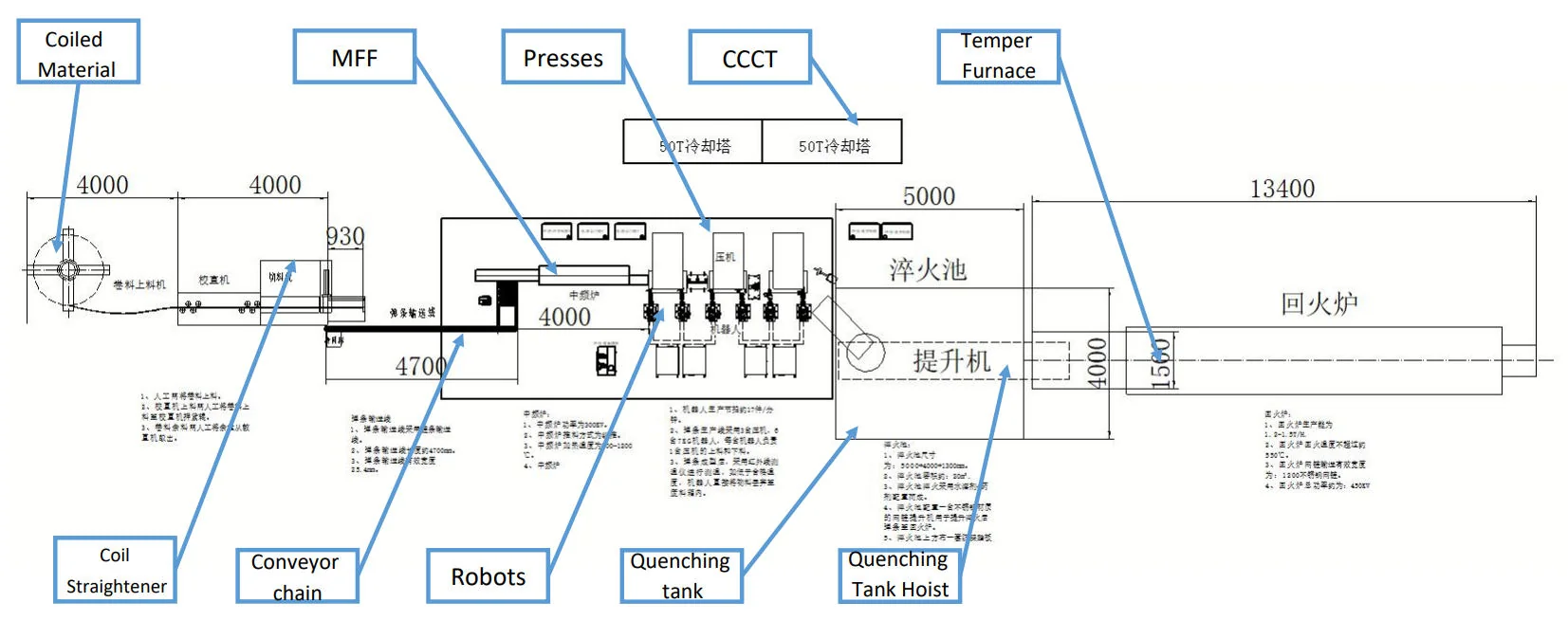
Based on the customer's requirements, the production system was configured with:
•Automatic coiled material feeder
•Automatic coil straightening and cutting equipment
•Automatic rod material feeding mechanism
•Medium frequency induction heating furnace (IGBT)
•Six industrial robots
•Three forging presses
•Oil quenching system
•Cooling tank and cooling tower
•Roller type mesh belt tempering furnace
•PLC control system
The complete layout was designed to ensure smooth material transfer between each process.
Automatic Material Preparation and Heating Process
The production starts with automatic cutting, where steel materials are prepared according to the required dimensions.
After cutting, the materials are transferred automatically to the heating section.
The medium frequency induction heating furnace provides controlled and uniform heating before forging. Compared with manual heating methods, the automated process helps maintain more stable temperature conditions and improves production repeatability.
Robotic Forging System Improves Production Efficiency
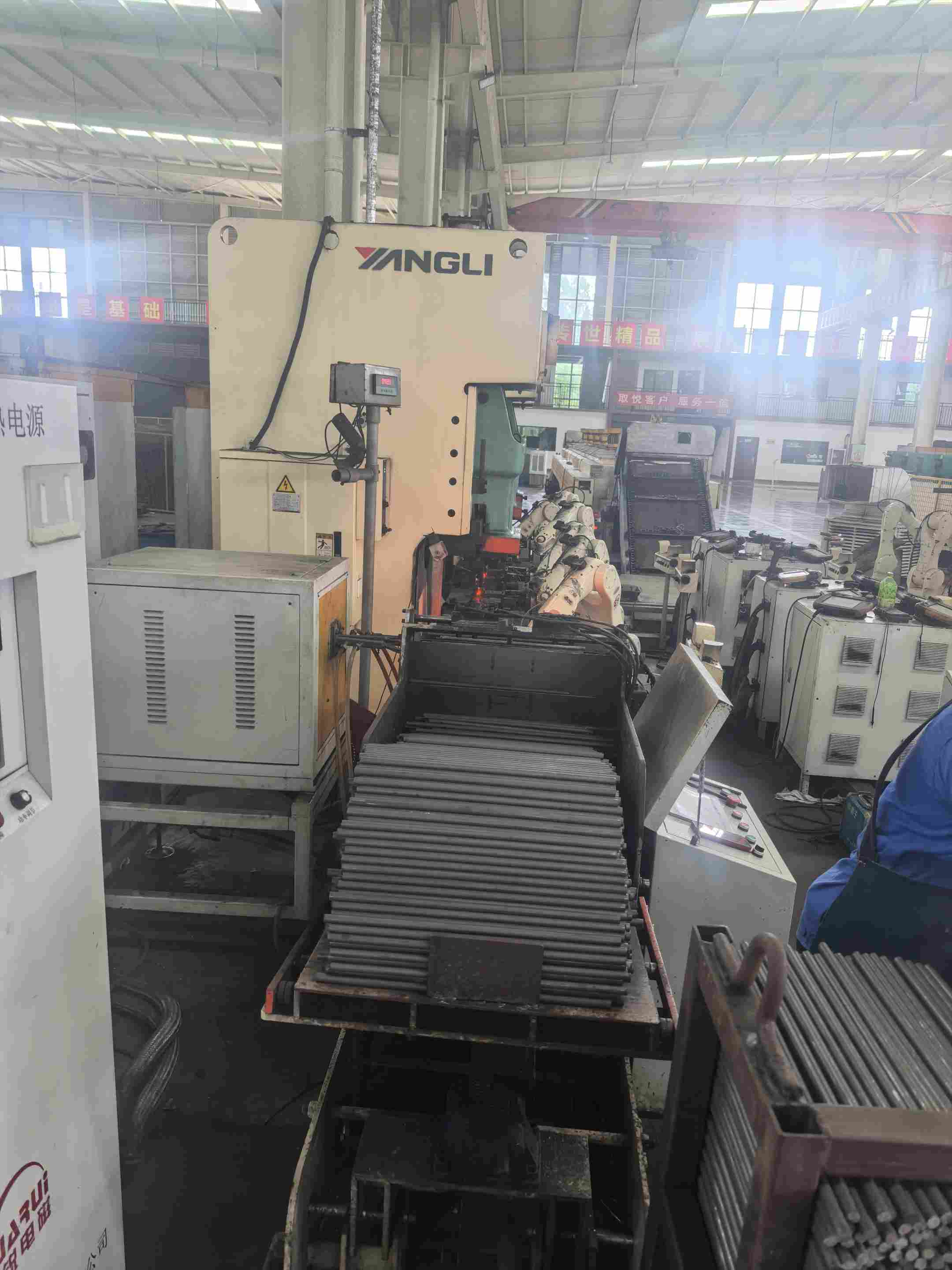
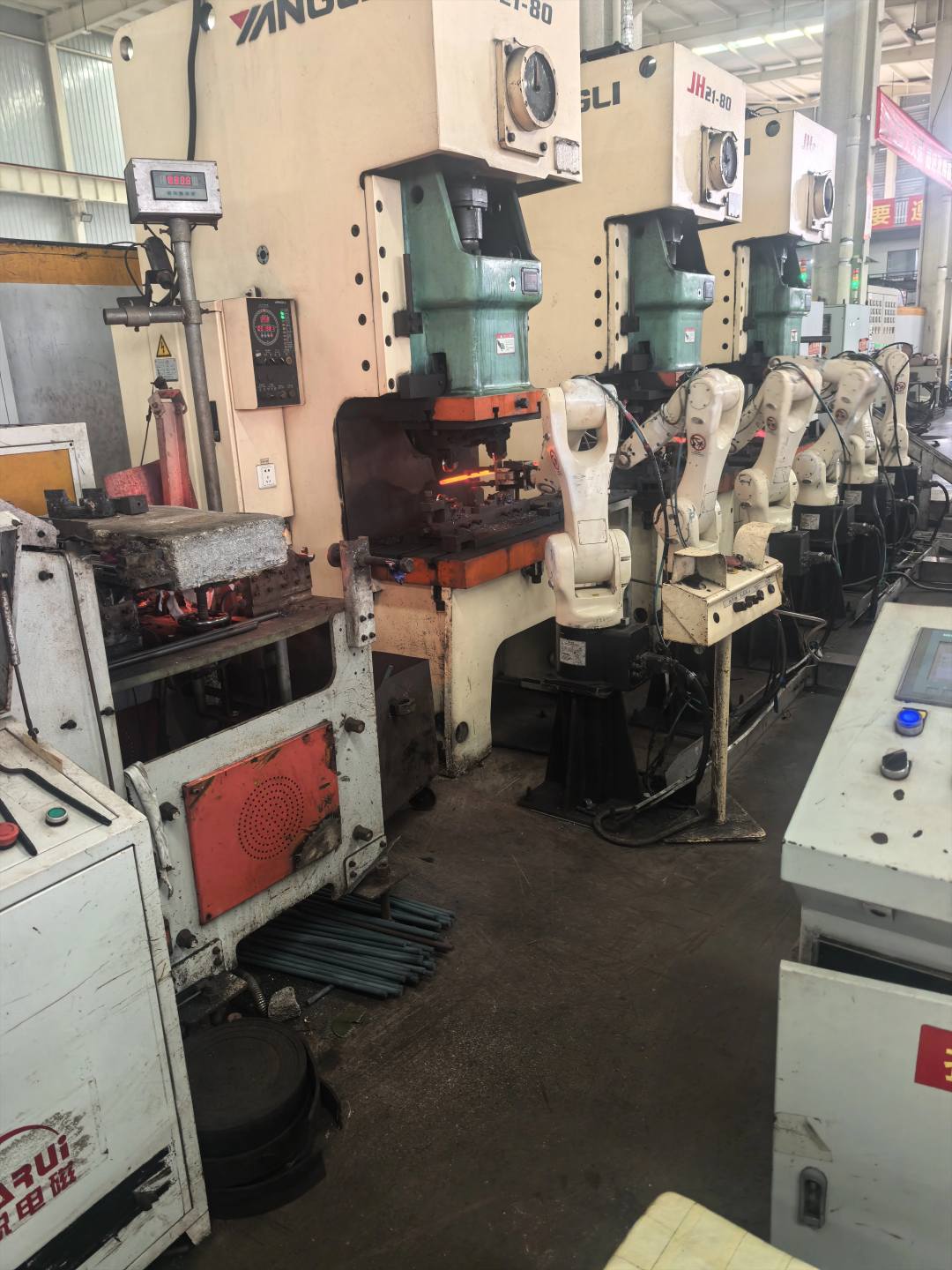
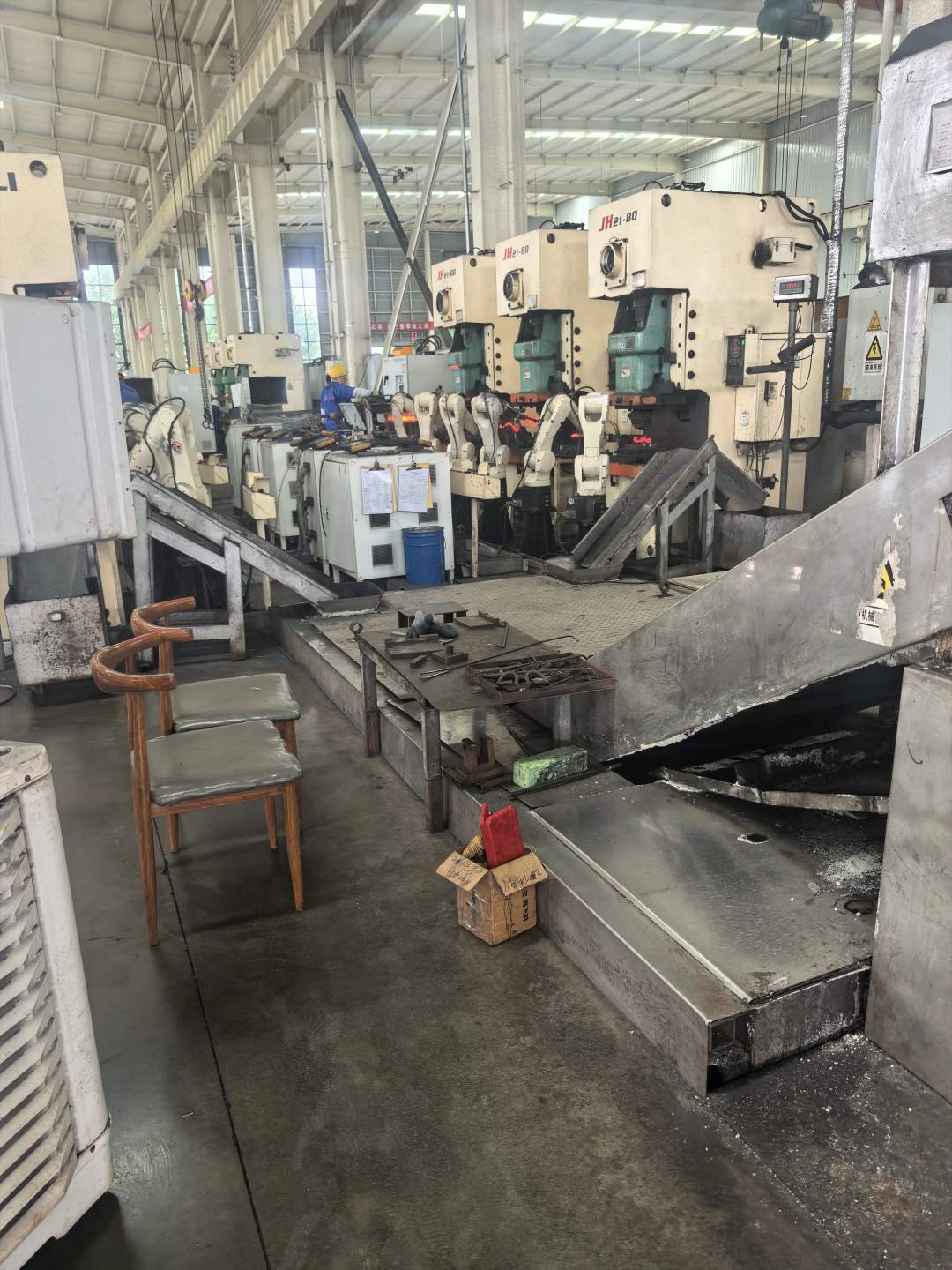
One of the key improvements of this project was the integration of six industrial robots with three forging presses.
The robots handle material transfer between heating and forging processes, creating a continuous production cycle.
Compared with manual handling, robotic operation reduces waiting time between processes and keeps the production rhythm more consistent.
The robotic system became the core part of the upgraded railway elastic clip production line, helping the manufacturer increase output while maintaining stable forming quality.
Heat Treatment and Quality Control
After forming, the clips enter the heat treatment process.
The production line includes:
Oil quenching tank
Cooling system
Tempering furnace
These processes are designed to achieve the required mechanical properties and improve product durability.
For railway applications, heat treatment plays an important role because elastic clips must withstand repeated loading conditions during service.
 、
、 
Production Results After Automation Upgrade
After commissioning, the upgraded production system achieved a significant improvement in manufacturing efficiency.
Key results include:
Item | Result |
Production type | Fully automated manufacturing |
Robots integrated | 6 units |
Forging presses | 3 units |
Production speed | Approx. 17 pieces/min |
Monthly output | Around 900,000 pieces |
The production capacity was increased significantly compared with the previous manual production method.
More importantly, the automated process provided better control over production parameters, helping the manufacturer maintain consistent quality during continuous operation.
Inspection and Surface Treatment After Production
After manufacturing, finished elastic clips are inspected according to customer requirements.
The inspection process includes fatigue testing to verify product performance under repeated loading conditions.
Surface treatment and coating processes are also carried out when required to improve corrosion resistance.
These steps are important parts of the overall railway fastening system, where each component needs to meet strict reliability requirements.
Project Value: Building a More Flexible Railway Component Factory
This automation upgrade helped the manufacturer move from labor-intensive production toward a more stable and scalable manufacturing model.
The project demonstrates that automation is not simply about replacing manual work.
A production line upgrade always starts with the existing process. Before introducing automation, it is important to understand how materials move, where operators spend time, and which steps affect production stability.
In this project, the automation system was developed around the customer's actual manufacturing requirements rather than a standard equipment package. This approach helped create a smoother production flow and provided better support for future capacity expansion.
With experience in robotic handling, forging applications, and railway component manufacturing, XUJI continues to cooperate with manufacturers who are looking for reliable automation improvements.