


- Home
- >
- Products
- >
- Deep Throat Press
- >
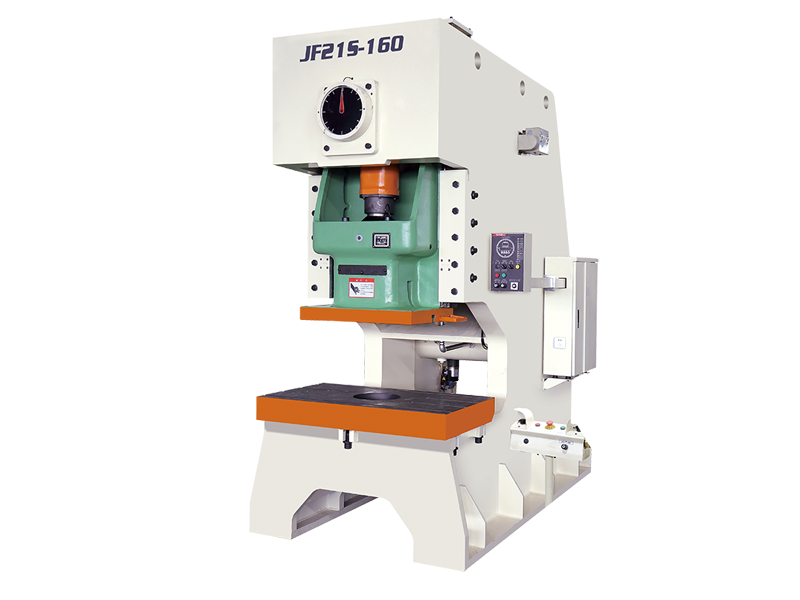
Deep Throat Press
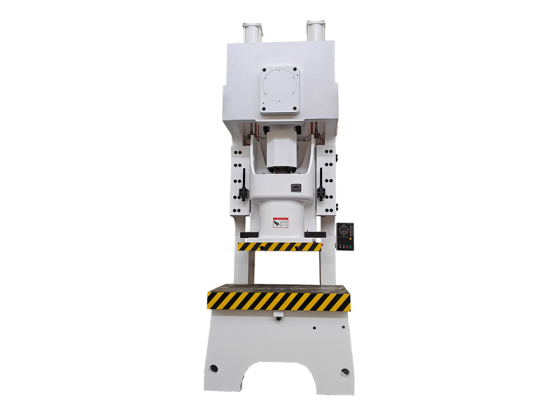
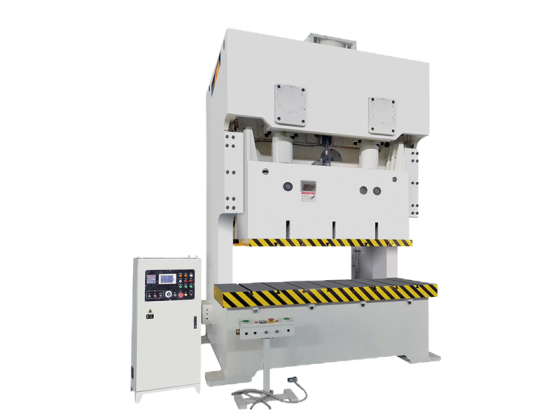
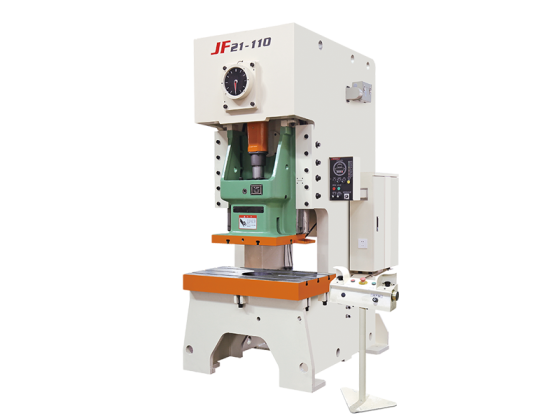
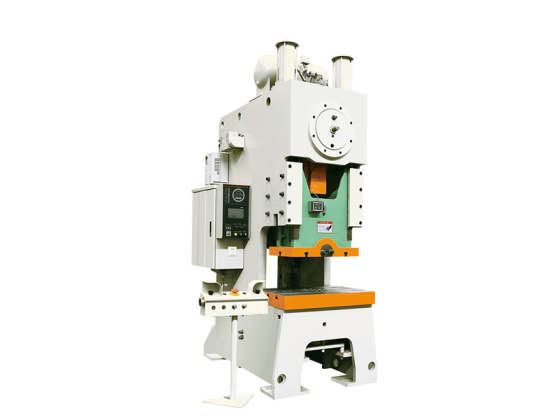
High-performance deep throat press is designed for deep-throat forming, offering a maximum throat depth of 800 mm and supporting complex workpiece processing with depth-to-diameter ratios ≥3:1 (e.g., automotive fuel tanks, stainless steel containers). They deliver 200% deeper processing than traditional open single-point presses and eliminate the need for secondary trimming.
- Information
Deep Throat Power Press with High Performance | Precision Deep Drawing Equipment Solutions
The Xuji's MC1S/JF21S high-performance deep throat presses are engineered for precision stamping and complex forming tasks. Featuring a robust frame, optimized drive system, and exceptional slide guidance, these machines deliver high rigidity, stability, and smooth operation. Their deep throat design accommodates large or irregularly shaped workpieces, making them ideal for demanding applications in automotive, electronics, and home appliance manufacturing. Equipped with intelligent control systems and automation-ready interfaces, they ensure consistent quality and efficiency. Suitable as a deep throat press, deep throat power press, or deep throat arbor press, the MC1S/JF21S represent smart solutions for modern precision metalworking.
I. Core Advantages of High-Performance Deep Throat Press
1. Super Deep Throat Design, Meet Complex Deep Pressing Needs
High-performance deep-throat presses are designed for deep-throat forming, offering a maximum throat depth of 800 mm and supporting complex workpiece processing with depth-to-diameter ratios ≥3:1 (e.g., automotive fuel tanks, stainless steel containers). They deliver 200% deeper processing than traditional open single-point presses and eliminate the need for secondary trimming.
2. High-Rigidity Frame, Overload Protecting System
Thickened welded steel structure undergone heat-aged to eliminate stress and increase rigidity by 40%. Equipped with rigid overload and hydraulic overload protector.
3. Precision Guide
Six-sided rectangular guide rail matched with the eight-sided guide slider to ensure the slider's repeat positioning accuracy of ±0.02 mm.
II. Features
High-rigidity welded steel frame with deep throat design for extended workpiece accessibility.
Combined dry-type pneumatic friction clutch-brake system ensures precise motion control.
Oil-immersed gear transmission reduces wear and noise.
Six-sided rectangular extended guide rails enhance slide alignment and stability.
JF21S Series: Rigid mechanical overload protector for basic safety.
MC1S Series: Hydraulic overload protector with auto-release and alarm function.
MC1S/JF21S-25/45: Manual die height adjustment with scale display.
MC1S/JF21S-63+: Electric die height adjustment with digital display.
Lifting balance cylinder minimizes vibration during operation.
Imported dual-solenoid valves ensure reliable pneumatic control.
Forced grease lubrication system with centralized lubrication points.
Integrated control interface (includes electronic cam for advanced motion profiling).
International brand PLC controller for programmable operation.
Optional accessories: Air cushion, automatic feed shaft device, light curtain, slide knockout device, automation devices.
III. Industry applications and technical parameters
1. Typical application scenarios
Automobile manufacturing: deep drawing of fuel tanks, exhaust pipe flange forming;
Home appliance industry: integrated forming of washing machine inner barrels, oven cavity stamping;
Industrial packaging: precision processing of chemical tanks and metal gas cylinders.
2. Technical Parameter
Specification | JF21S-25 | MC1S-45 JF21S-45 | MC1S-63 JF21S-63 | MC1S-80 JF21S-80 | ||
Nominal Force | kN | 250 | 250 | 630 | 800 | |
Nominal Stroke | mm | 3 | 4 | 4 | 5 | |
Slide Stroke | mm | 80 | 100 | 120 | 140 | |
SPM | Fixed | min⁻1 | 100 | 80 | 70 | 60 |
Variable (Option) | min⁻1 | 80-120 | 40-90 | 35-80 | 50-70 | |
MAX Die Height | mm | 250 | 270 | 300 | 320 | |
Die Height Adjustment | mm | 50 | 60 | 80 | 80 | |
Between Slide Center to Frame | mm | 710 | 710 | 760 | 760 | |
Bolster Area | mm | 440 x 810 | 580 x 900 | 580 x 1000 | ||
mm | Φ180 x 30 xΦ160 | Φ200 x 40 xΦ180 | Φ200 x 40 xΦ180 | |||
Bolster Thickness | mm | 80 | 110 | 110 | 120 | |
Bolster Opening (FB x LR) | mm | 260 x 250 | 300 x 300 | 390 x 520 | ||
Slide Area (FB x LR) | mm | 250 x 360 (JF) 300 x 360 (MC) | 340 x 410 | 400 x 480 | 420 x 560 | |
Shank Hole (Dia x Depth) | mm | Φ40 x 60 | Φ50 x 80 | Φ50 x 80 | ||
Between Columns | mm | 450 | 550 | 560 | 600 | |
Main Motor Power | kW | 3 | 5.5 | 5.5 | 7.5 | |
Outline Dimension (FB x LR x H) | mm | 2025 x 1025 x 2150 | 2250 x 1125 x 2275 | 2350 x 1250 x 2580 | 2350 x 1290 x 2800 | |
Specification | MC1S-110 JF21S-110 | MC1S-125 JF21S-125 | MC1S-160 JF21S-160 | MC1S-200 JF21S-200 | ||
Nominal Force | kN | 1100 | 1250 | 1600 | 2000 | |
Nominal Stroke | mm | 6 | 6 | 6 | 6 | |
Slide Stroke | mm | 160 | 160 | 160 | 200 | |
SPM | Fixed | mm | 50 | 50 | 70 | 40 |
Variable (Option) | mm | 30-60 | 30-60 | 25-50 | 25-50 | |
MAX Die Height | mm | 350 | 350 | 350 | 450 | |
Die Height Adjustment | mm | 80 | 80 | 110 | 110 | |
Between Slide Center to Frame | mm | 760 | 760 | 800 | 800 | |
Bolster Area (FB x LR) | mm | 680×1150 | 680×1150 | 740 x 1300 | 760 x 1400 | |
Bolster Opening (up dia. x depth x low dia.) | mm | Φ260×50×Φ220 | Φ260×50×Φ220 | Φ300×50×Φ260 | Φ300×50×Φ260 | |
Bolster Thickness | mm | 140 | 140 | 150 | 160 | |
Bolster Opening (FB x LR) | mm | 420×540 | 420×540 | 480 x 600 | 480 x 600 370 x 570 (square air cushion) | |
Slide Area (FB x LR) | mm | 500 x 650 | 500 x 680 | 580 x 770 | 600 x 800 | |
Shank Hole (Dia x Depth) | mm | Φ60 x 80 | Φ60 x 80 | Φ65 x 90 | Φ65 x 90 | |
Between Columns | mm | 760 | 760 | 830 | 850 | |
Main Motor Power | kW | 11 | 11 | 15 | 18.5 | |
Outline Dimension (FB x LR x H) | mm | 2580 x 1410 x 3200 | 2580 x 1450 x 3200 | 2840x 1590 x 3450 | 2800 x 1595 x 3600 | |
III. FAQ
Q1: What is the maximum material thickness a deep throat press can process?
A1: It supports steel plates from 0.5 mm to 12 mm thick, or metals of equivalent strength; specialized models can handle up to 15 mm high-strength steel.
Q2:How does the throat depth of a deep neck press affect processing?
A2:The throat depth determines the single-side processing capability, which can avoid workpiece flipping, improve efficiency and precision, and is especially suitable for large and complex workpieces.
Q3: Is the maintenance cost of the hydraulic insurance device high?
A2: Low maintenance cost. The hydraulic system requires no replacement parts, only routine checks of oil level and filter elements. Maintenance frequency is 1/2 that of mechanical insurance (Ref. Abstract 1,7).
Q4: Can it adapt to existing molds?
A3: Yes. The throat depth design is compatible with standard molds, while offering customized die shank interfaces for special requirements.